Choosing a basketball court floor is a major investment. A lower quotation may look attractive, but what happens when shipping costs rise, installation takes longer than planned, or maintenance becomes more expensive than expected?
When comparing a China Hardwood Sport Flooring Manufacturer with a Western brand, buyers need to look beyond the initial price. The real question is which supplier offers the best balance of playing performance, delivery reliability, technical support, and long-term cost.
For sports facility owners, contractors, and procurement managers, a fair comparison starts with measurable evidence. By checking technical specifications, comparing complete quotations, and calculating total cost of ownership (TCO), you can make a confident decision based on facts rather than assumptions about where a product is made.
Why Compare a China Hardwood Sport Flooring Manufacturer With a Western Brand?
A Chinese manufacturer and a Western brand may offer similar-looking basketball courts, but their quotations may cover different products and services. One may include installation support and delivery, while another may quote only the flooring materials.
That difference matters. Before deciding which supplier offers better value, make sure both are quoting the same scope of work.
Compare the complete flooring system
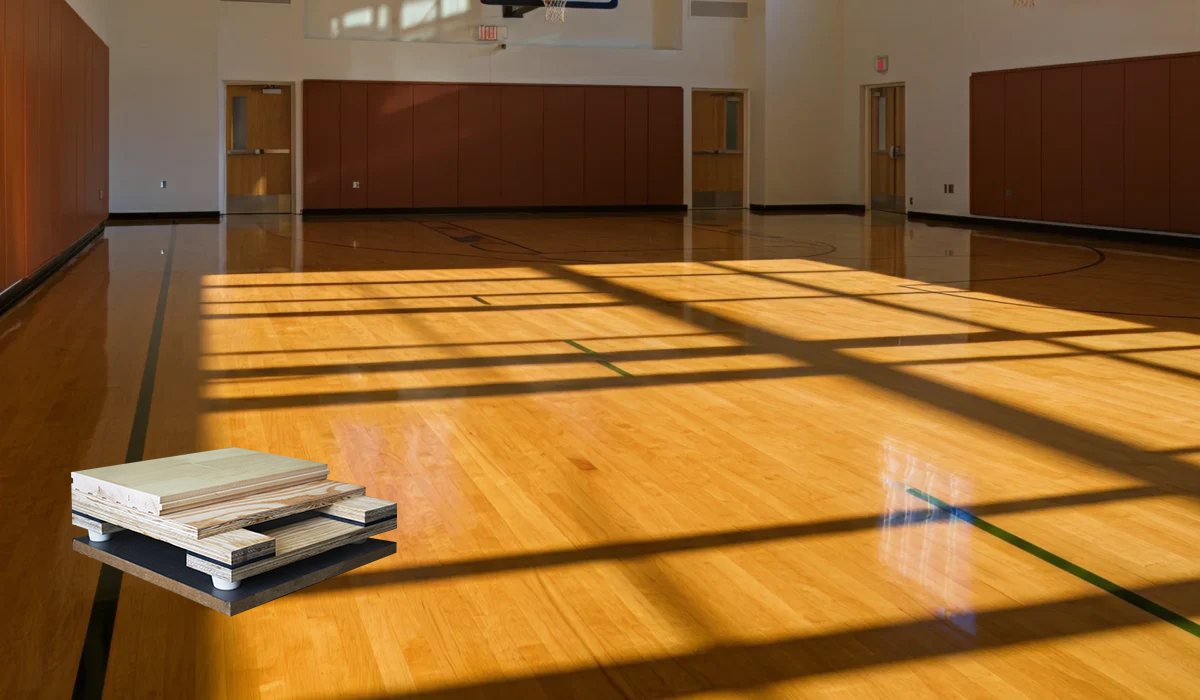
Hardwood sports flooring is more than a layer of maple. The full system may include the wood surface, subfloor structure, resilient components, fasteners, coatings, and installation materials. Each part can affect playing performance, durability, and maintenance needs.
Ask both suppliers for a detailed system specification. Confirm the wood type, construction, thickness, finish, and installation requirements. This makes it easier to compare a basketball court maple flooring manufacturer with a Western competitor on equal terms.
Compare warranties and included services
Check warranty coverage, exclusions, response times, spare parts, and responsibility for installation defects. A lower material price may not represent better value if essential services cost extra.
So, once the scope is clear, how can you determine whether the proposed floor will deliver the performance your facility needs?
How a China Hardwood Sport Flooring Manufacturer Proves Performance
A floor can look excellent in a product photo and still fail to meet the needs of a busy sports facility. That is why technical testing matters more than marketing claims.
When choosing indoor basketball court material, buyers should assess the complete flooring system against the performance requirements of their project.
Check wood quality and system construction
Hard maple is commonly used for indoor basketball courts because of its hardness, wear resistance, and playing characteristics. However, wood species alone cannot tell you how the entire floor will perform.
Ask for details about wood grading, moisture control, subfloor design, surface finish, and installation methods. These details help you judge whether the system suits your court’s expected use.
Request measurable performance data
Relevant performance measures include shock absorption, vertical deformation, ball rebound, and surface friction. Standards such as EN 14904 in Europe and ASTM F2772 in the United States provide useful frameworks for assessing indoor sports floors. The applicable requirements depend on the project and governing rules.
Request test reports for the actual proposed flooring system, including the test method, results, and laboratory details. If a supplier claims compliance with FIBA requirements, ask for evidence that applies to the exact product and configuration.
A basketball court maple flooring manufacturer should be able to explain its technical specifications and identify the documents supporting its claims.
But strong test results are only part of the decision. Can the supplier deliver the approved system on time and support it after installation?
How a China Hardwood Sport Flooring Manufacturer Can Reduce Project Risk
A flooring project involves more than manufacturing. Shipping, site preparation, installation, and final inspection must all fit the construction schedule.
A delay can affect other contractors and postpone a facility’s opening. Buyers should therefore compare delivery plans and service commitments alongside product quality.
Compare lead times and delivery plans
Ask each supplier to separate the estimated production period from shipping, customs clearance, site delivery, installation, and handover. Confirm which dates are firm and which depend on other parties.
A useful comparison includes:
Production completion and factory inspection dates.
Shipping arrangements and estimated arrival dates.
Installation requirements and responsibility for site preparation.
Procedures for missing, damaged, or incorrect materials.
A China-based supplier may offer attractive factory pricing, but the final result depends on the complete delivery plan. Compare actual schedules and written commitments instead of assuming one country is always faster.
Evaluate technical support and after-sales service
Ask who will answer technical questions, help resolve installation problems, and supply replacement materials. Confirm warranty conditions and the process for reporting defects.
VMKON states that it supports customers through consulting, design, installation, and maintenance, with international operations in Germany and the United States in addition to its Guangzhou headquarters.
Buyers should confirm the specific services, response times, and responsibilities available for their project.
With delivery and service risks understood, the next step is to put every major expense into one financial comparison.
Calculate Total Cost of Ownership With a China Hardwood Sport Flooring Manufacturer
The lowest quotation does not always produce the lowest long-term cost. Total cost of ownership helps buyers compare the money they will spend over the floor’s expected service period.
Compare the installed cost, not just the material price
Start with a complete cost breakdown:
- Flooring materials and accessories.
- Packaging, freight, insurance, duties, and taxes.
- Subfloor preparation and installation labor.
- Testing, commissioning, and handover.
- Maintenance, repairs, and replacement materials.
- Facility downtime and eventual disposal costs.
- Subtract any expected residual value at the end of the evaluation period. Use the same court area, currency, time frame, and service assumptions for both suppliers.
- Use a simple TCO calculation
Consider a hypothetical 1,000-square-metre basketball court evaluated over 15 years. The following figures are examples only, not actual VMKON or Western-brand quotations.
| Cost category | Chinese supplier | Western supplier |
|---|---|---|
| Materials, freight, and installation | $100,000 | $125,000 |
| Maintenance and repairs over 15 years | $30,000 | $25,000 |
| Downtime costs | $5,000 | $3,000 |
| Total 15-year cost | $135,000 | $153,000 |
| Annual cost per square metre | $9.00 | $10.20 |
In this example, the Chinese supplier has a lower estimated ownership cost, even after allowing for higher maintenance and downtime expenses. However, the result depends entirely on the assumptions. Different quotations or maintenance needs could reverse it.
For a more complete investment analysis, discount future costs to their present value and test how the result changes if freight, repairs, or downtime increase.
The lesson is simple: compare real project costs, not national stereotypes. But how can you trust the figures and confirm that the installed floor matches the quotation?
What Evidence Should a China Hardwood Sport Flooring Manufacturer Provide?
Good procurement decisions depend on evidence that can be checked before, during, and after installation. Clear requirements also make it easier to resolve disagreements if the finished floor does not meet expectations.
Check documents before signing
Request a technical specification, system drawings, material details, relevant test reports, warranty terms, maintenance instructions, and a written delivery schedule. Review samples and confirm that the supplied product will match the approved specification.
For larger projects, agree on factory quality checks and inspection points before production begins.
Set clear installation and acceptance rules
The contract should explain how the completed court will be inspected and accepted. Depending on the project, checks may cover surface condition, levelness, joints, line markings, and required sports-floor performance tests.
Define who performs each test, what results are acceptable, how defects will be corrected, and which documents are required before final payment.
These steps protect both buyer and supplier by setting clear expectations from the start. With the right evidence in place, buyers can assess a manufacturer on actual performance rather than promises.
Why Choose VMKON as Your China Hardwood Sport Flooring Manufacturer?
Once you know how to compare suppliers, the next question is which manufacturer can meet your project’s needs. VMKON offers a range of flooring systems and project support services for buyers looking for practical solutions for sports facilities.
Explore hardwood systems for different projects
VMKON’s hardwood portfolio includes maple and birch flooring, single- and double-keel structures, and multilayer systems in different configurations. This gives buyers options to assess based on their facility, budget, and technical requirements.
Rather than choosing by product name alone, ask the VMKON team which system fits your project specifications and request supporting technical documents.
Look beyond the initial quotation
VMKON’s stated approach combines product development, manufacturing, consulting, installation, and after-sales support. Its international operations can also be relevant for buyers seeking support across different markets.
As you evaluate VMKON against other suppliers, compare the same performance requirements, delivery terms, warranty conditions, and acceptance tests. A reliable China Hardwood Sport Flooring Manufacturer should welcome clear questions and provide evidence that helps you make an informed decision.
Conclusion
Comparing Chinese and Western sports flooring brands comes down to more than the country of origin. Buyers should examine complete system specifications, verify performance, confirm delivery commitments, and calculate ownership costs over the same period.
A lower upfront price is valuable only when the flooring meets the project’s performance needs and the supplier can deliver the agreed service. Clear documentation and acceptance procedures help reduce risk and protect your investment.
Planning a new basketball court or upgrading an existing facility? Contact VMKON to discuss your project, explore suitable hardwood flooring systems, and request a quotation based on your technical requirements and budget.
FAQs
1. Is a Chinese hardwood sports flooring manufacturer cheaper than a Western brand?
Chinese manufacturers may offer competitive pricing, but compare freight, installation, maintenance, and warranty costs before deciding.
2. What is total cost of ownership (TCO)?
TCO includes purchase, installation, maintenance, repairs, downtime, and end-of-life costs.
3. How do I check flooring quality?
Review technical specifications, independent test reports, and installation acceptance criteria.
4. Why consider VMKON?
VMKON offers hardwood flooring options, project support, and after-sales services.