Choosing a China hardwood sports floor OEM/ODM partner is an important decision for sports flooring distributors, contractors, and project owners. A good sample may look perfect, but can the manufacturer produce the same quality across hundreds or thousands of square meters? That is where a clear production process makes a difference.
For buyers, moving from prototype to mass production should never be based on trust alone. Each stage needs clear targets, technical checks, written records, and approval from both parties. Without these steps, small problems with wood quality, dimensions, or surface finishing can become expensive production issues.
At VMKON, we believe successful OEM/ODM projects depend on careful product development, manufacturing control, and close communication. Let’s look at how buyers and manufacturers can establish practical milestones before approving a commercial order.
Why China Hardwood Sports Floor OEM/ODM Projects Need a Stage-Gate Process
A Stage-Gate process divides production into clear steps. Each step has specific requirements that must be met before the project moves forward.
For a China hardwood sports floor OEM/ODM project, this approach helps buyers control product quality, reduce delays, and avoid costly changes after production begins.
We recommend establishing six important checkpoints:
- Sample and prototype confirmation.
- Trial production.
- Technical testing and validation.
- Supplier documentation approval.
- Mass production release.
- Final inspection and shipment acceptance.
Each checkpoint should have a responsible person, clear acceptance criteria, and written approval. But what should buyers actually check at each stage?
Stage 1: Sample and Prototype Confirmation
The prototype is the first physical example of the product the buyer wants to manufacture. It should reflect the agreed design, materials, structure, and appearance.
However, approving a sample because it looks good is not enough. Buyers should check several important details.
Confirm Wood Species, Grade, and Dimensions
For hardwood sports flooring, maple and birch are common material options. Buyers should confirm the selected wood species, grade, appearance, thickness, width, and length.
Moisture content should also be checked against the agreed project requirements. Incorrect moisture levels can lead to gaps, movement, or dimensional changes after installation.
Check Structure and Surface Finish
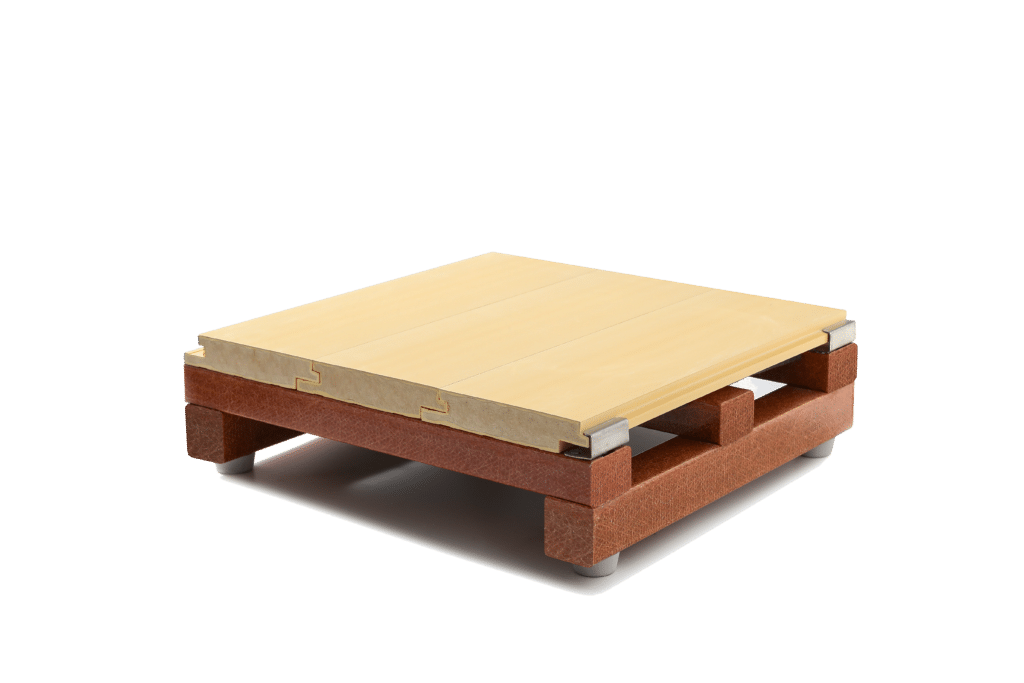
The flooring structure is just as important as the wood itself. Buyers should review the approved structural drawings, including the single-keel or double-keel configuration where applicable.
Surface color, coating, texture, and finish should also match the project requirements.
Once everything is checked, both parties should sign off on a reference sample and approved specification sheet. This becomes the standard for later production.
But can a manufacturer reproduce that sample consistently? The next stage provides the answer.
Stage 2: Trial Production
Trial production helps confirm whether the manufacturer can turn an approved prototype into a repeatable manufacturing process.
Instead of immediately starting a large order, the China maple hardwood sports floor factory should produce a controlled pilot batch using the planned materials, machinery, and production methods.
Check Manufacturing Consistency
Buyers should inspect the trial batch for:
- Consistent wood species and material grades.
- Accurate dimensions and machining tolerances.
- Uniform surface finishing and color.
- Proper component fitting and assembly.
- Consistent moisture content within agreed limits.
The goal is to identify differences between the approved sample and actual production output.
Identify Problems Before Scaling Up
A trial run may reveal issues that were not visible during prototype development. For example, repeated machining may create dimensional differences, while finishing across a larger batch may produce slight color variations.
These issues should be recorded, corrected, and checked again before approval.
A successful trial production run gives buyers more confidence that the manufacturer can maintain product consistency. However, appearance and dimensions are only part of the picture. How well will the flooring perform?
Stage 3: Technical Testing and Validation
Technical validation confirms whether the flooring meets the agreed performance and safety requirements.
For China hardwood sports floor OEM/ODM projects, testing should follow the product specifications, intended application, and relevant sports flooring standards.

Moisture Content and Dimensional Stability
Wood naturally responds to changes in temperature and humidity. Buyers should therefore require moisture content checks and suitable assessments of dimensional stability.
These checks help reduce the risk of excessive movement, gaps, and other installation problems.
Structural and Surface Performance
The flooring structure should be checked against approved drawings and project requirements. Surface quality, coating adhesion, and wear resistance should also be assessed using suitable test methods.
Sports Performance
For professional sports facilities, buyers may require testing for shock absorption, vertical deformation, ball rebound, and surface friction.
Where applicable, relevant requirements such as FIBA standards should be included in the project acceptance plan. Testing methods and required results should be agreed upon before production rather than after the order is completed.
Once technical requirements are confirmed, the next question is simple: how can buyers prove that all these checks were completed?
Stage 4: Supplier Documentation and Quality Records
Good documentation protects both the buyer and manufacturer. It provides clear evidence that the product follows the approved requirements.
A professional China hardwood sports floor OEM/ODM supplier should agree on the required documents before mass production.
Important records include:
- Approved product drawings and technical specifications.
- Bill of materials and wood material records.
- Prototype approval documents.
- Trial production inspection reports.
- Moisture content and technical test results.
- Production quality inspection records.
- Packaging and shipment inspection reports.
Buyers should also request records of nonconformities and corrective actions when problems occur.
These documents make it easier to trace issues, compare production batches, and resolve disagreements. More importantly, they create a clear record of what both parties approved.
Stage 5: Mass Production Release and Final Acceptance
Mass production should begin only after the previous checkpoints have been completed and approved.
A successful sample or trial batch does not automatically mean the commercial order is ready for release. Buyers and manufacturers should review the results together.
Establish Written Release Criteria
Before production begins, both parties should confirm:
- Final approved product specifications.
- Accepted prototype and trial production results.
- Completed technical tests.
- Approved material and quality documents.
- Production quantity and delivery schedule.
- Inspection and packaging requirements.
The buyer and supplier should provide written authorization before the factory starts the full order.
Control Production and Final Inspection
During manufacturing, quality checks should take place at agreed intervals. These may include incoming material inspection, in-process checks, and finished-product inspection.
Before shipment, buyers should verify product dimensions, appearance, quantity, packaging, and labeling against the purchase agreement.
If any item fails inspection, the responsible team should record the problem and agree on corrective action before acceptance.
This process reduces the chance of receiving products that differ from the approved sample.
Why Choose VMKON as Your China Maple Hardwood Sports Floor Factory Partner?
At VMKON, we understand that international buyers need more than a flooring product. They need a manufacturing partner who understands product development, project requirements, and long-term customer support.
Our approach to sports flooring is built around research, innovation, and practical application.
R&D and Product Development
We focus on five key areas in our R&D work: new materials, new designs, new technologies, new functions, and new user experiences.
This development mindset supports our work across different sports flooring systems and helps us respond to changing project needs.
Diverse Hardwood Flooring Solutions
Our flooring portfolio includes maple and birch hardwood systems, with single-keel and double-keel structural options. We also offer multi-layer hardwood flooring solutions.
This range gives buyers different product configurations to consider when planning their sports facilities.
International Project Experience and Support
Based in Guangzhou, China, we support international customers through consulting, design, installation, and maintenance services. We also have branches in Germany and the United States.
Our team is committed to customer support and after-sales service, helping customers throughout their sports flooring projects.
For buyers seeking a China hardwood sports floor OEM/ODM partner, we believe clear communication and a strong focus on product development are essential to building lasting business relationships.
Conclusion
A successful hardwood sports flooring project requires more than an approved sample. Buyers need clear milestones for prototype confirmation, trial production, technical testing, documentation, and mass production release.
Each stage should have measurable requirements and written approval. This approach helps reduce production risks, improve product consistency, and protect project schedules.
At VMKON, we welcome opportunities to discuss your hardwood sports flooring requirements and explore suitable product solutions. Contact our team today to discuss your OEM/ODM project and take the first step toward building a reliable sports flooring partnership.
Frequently Asked Questions
1. How many stages should a hardwood sports floor OEM/ODM project have?
A practical process includes six checkpoints covering prototype approval, trial production, testing, documentation, production release, and final acceptance.
2. Why is trial production important?
It checks whether the manufacturer can reproduce the approved sample consistently before starting a large order.
3. What should buyers check before mass production?
Buyers should confirm product specifications, material records, test results, inspection reports, and written production approval.
4. Why choose a China maple hardwood sports floor factory?
A suitable factory can provide product development, manufacturing support, customization, quality control, and international project assistance.