Sports Hall Flooring: Multi-Sport Selection Guide
A multi-sport hall asks one floor to support several movement patterns, balls, shoes and operating modes. Basketball needs reliable rebound and cutting traction. Volleyball emphasizes landing comfort. Badminton requires controlled grip and clear line visibility. The same venue may also host assemblies, examinations, retractable seating and temporary stages.
Because these demands can conflict, sports hall flooring should be selected from the actual booking schedule. The goal is a documented compromise that protects the dominant sports while supporting the building’s non-sport use.
| Quick answer: The best multi-sport hall floor is a tested system that matches the venue’s dominant sports, rolling loads, maintenance capacity and event schedule. Hardwood and engineered systems suit premium basketball-led halls; PVC supports many school and community applications; modular and bio-based systems can add fast installation, repair or removability. |
Create a Sports and Operations Matrix
List every activity, weekly hours and importance. A hall that hosts basketball five nights per week should not be specified the same way as a badminton center that occasionally hosts assemblies. Include user age, disability access, equipment and spectator modes.
Non-sport loads can be decisive. Retractable seating, stage legs, mobile goals, carts and examinations create point or rolling loads that a pure sports comparison may ignore.
Performance Demands by Activity
| Activity | Important floor behavior | Common conflict |
| Basketball | Ball rebound, traction, shock absorption and uniformity | Very soft systems can alter response |
| Volleyball | Landing comfort, grip and stability | High grip may affect other movements |
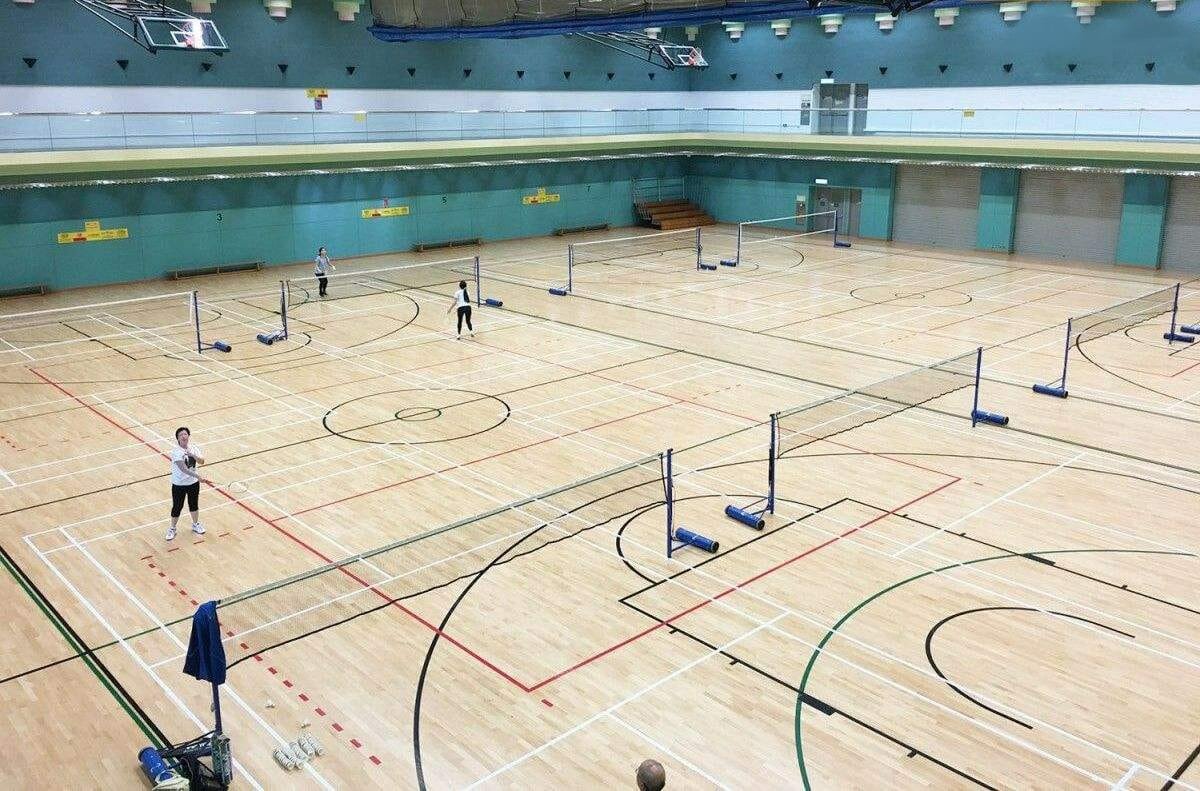
| Badminton | Controlled traction, low glare and line clarity | Multiple court lines can confuse users |
| Futsal / handball | Abrasion, traction and ball speed | Heavy wear and shoe interaction |
| Assemblies / exams | Indentation, chair loads and easy protection | Sports resilience can conflict with point loads |
| Events / stages | Rolling load and temporary protection | Surface damage and long closure |
Area-Elastic, Point-Elastic and Combined Thinking
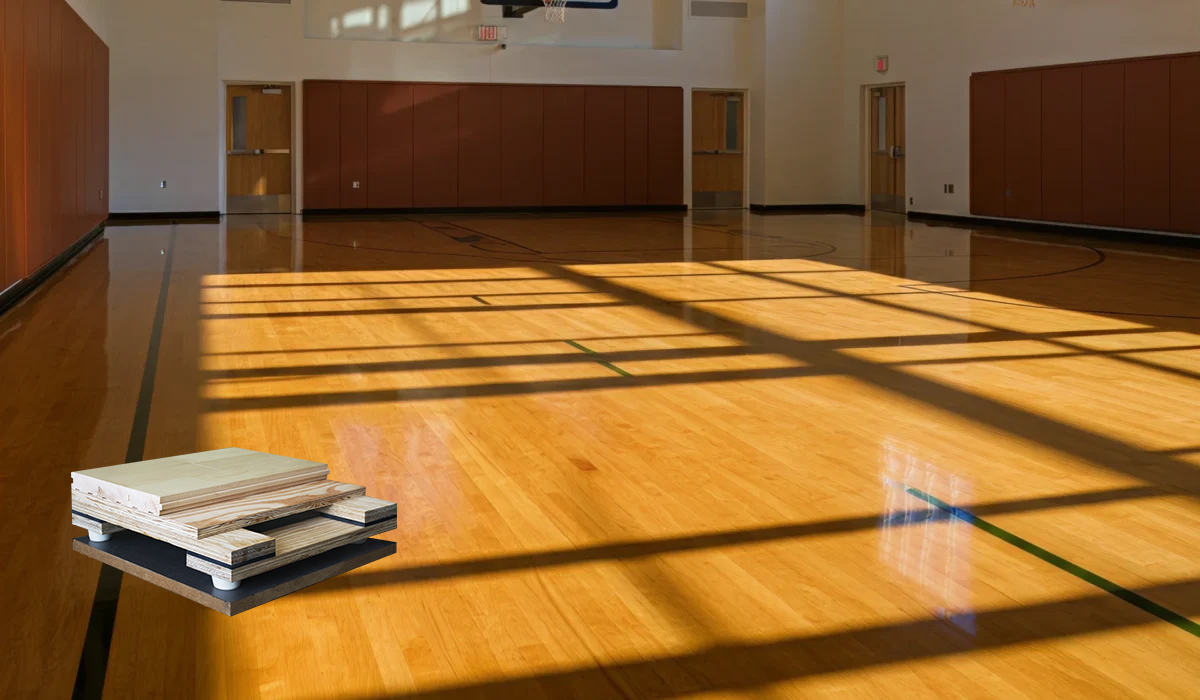
Indoor sports floors are often discussed by how deformation spreads under load. Area-elastic constructions distribute movement over a wider area and are associated with many wood sports floors. Point-elastic surfaces deform more locally and are common in resilient sheet products. Combined systems use layers to balance behavior.
The classification is useful, but the project should compare complete test results and operating requirements. The best category depends on sports, user groups, point loads and maintenance, not on terminology alone.
System Options for Multi-Sport Halls
| System | Multi-sport advantages | Operational caution |
| Hardwood | Premium basketball response, refinishing and traditional appearance | Humidity control and protection during events |
| Engineered wood | Wood appearance with layered stability and efficient installation | Wear layer and support system quality |
| PVC | Resilient, cleanable and widely used for several indoor sports | Seams, indentation and subfloor preparation |
| Modular tile | Fast repair and flexible installation | Acoustics, joint feel and rolling loads |
| Bio-based panel | Removable format, wood-like finish and fast assembly | Verify tests for the exact panel/support construction |
Court Lines and Visual Planning
Multiple line sets can make a hall difficult to use. Assign a color hierarchy based on the primary sport, maintain sufficient contrast and avoid unnecessary markings. Use scaled drawings to resolve overlaps around key zones, goals and service areas.
The surface color should support ball visibility and lighting without excessive glare. Logos and large graphics need to remain readable without interfering with line recognition.
Rolling Loads and Event Conversion
Ask manufacturers for rolling-load and indentation guidance. Retractable seating wheels, stage legs and equipment carts may need load-distribution panels or protective systems. A protection plan should specify materials, installation sequence and maximum time in place.
If the hall converts frequently, calculate labor and closure time. Portable or removable flooring can make sense when the sports floor itself must be stored, while a permanent floor may be protected for occasional events.
Lifecycle and Maintenance
Cleaning chemistry, dust control and entrance mats influence traction. Wood floors need environmental management and finish care; PVC needs seam and indentation inspection; modular systems need edge and connection checks. Staff training should be part of handover.
Compare ten-year maintenance and closure scenarios. A facility with limited technical staff may benefit from local component replacement, while a premium venue may accept planned refinishing to preserve a high-end playing surface.
Multi-Sport Hall Specification Checklist
- Rank sports and activities by weekly hours and importance.
- List rolling loads, seating, stages and non-sport events.
- Confirm required test standards and competition level.
- Survey subfloor, moisture and environmental control.
- Approve court-line and color hierarchy.
- Design protective systems for events.
- Compare maintenance and closure over ten years.
- Plan spare materials and staff training.
Frequently Asked Questions
Can one sports hall floor serve every sport equally?
Usually it is a managed compromise. Prioritize the dominant sports and confirm that secondary activities remain safe and practical.
Is hardwood suitable for multi-purpose halls?
Yes, especially when basketball is important, but event protection, humidity control and maintenance must be planned.
Is PVC better for schools?
PVC can be a strong school option because it is resilient and cleanable, but suitability depends on sports, subfloor, point loads and product quality.
How many court-line colors should be used?
Use only the necessary line sets and create a clear hierarchy. The exact palette should be approved on a scaled court drawing.
Can retractable seating damage the floor?
Yes, if wheel loads and protection are not coordinated. Obtain load data and use a specified distribution or protection system.
Conclusion
Sports hall flooring is a facility-planning decision. The project team should quantify sports use, event loads, maintenance and line complexity before comparing materials.
A transparent multi-sport matrix turns conflicting preferences into a defensible specification and helps suppliers quote comparable systems.
| Plan Your Sports Flooring Project with VMKONPlanning a new court, renovation or portable venue? Send VMKON the project country, sport, court dimensions, site or subfloor photos, expected usage, certification needs and target schedule. We will recommend a suitable system and prepare a project-based quotation.Website | WhatsApp +1 314 398 6832 | Request a Quote |
Recommended Internal Links
- Explore VMKON multi-sport court flooring
- View fieldhouse and multi-sport center solutions
- Compare all sports flooring systems
- Request a multi-sport specification
Reference Sources for Editorial Review
- ASTM F2772-24 – Indoor Sports Floor Systems
- EN 14904:2006 – Surfaces for Sports Areas
- FIBA Venue Guide
- Maple Flooring Manufacturers Association
- VMKON Sports Flooring Systems
Editorial note: Verify all project-specific performance, certification, legal, structural, fire, accessibility and installation requirements with qualified local professionals before publication or procurement.