
What Export-Ready Actually Means for a Chinese Wood Sports Flooring Manufacturer
Export-readiness is one of those phrases that gets thrown around in supplier catalogs without much substance behind it. For procurement managers sourcing from a China wooden sports floor manufacturer, it has a very specific, operational meaning — and confusing marketing language with genuine capability can cost a project months of delays and significant rework costs.
At its core, an export-ready manufacturer can do three things reliably: produce to an internationally recognized performance standard, document that compliance in a way that satisfies customs and end-client requirements, and ship product that arrives in spec — not just product that left the factory in spec.
On the certification side, the baseline markers worth checking are FIBA approval levels for basketball court applications, EN 14904 compliance for European markets, and DIN 18032 where German-standard projects are involved. These aren’t interchangeable. A manufacturer holding one doesn’t automatically qualify for the others, and buyers sourcing for multi-market rollouts need to ask specifically which standard applies to each SKU — not just which certifications the factory holds in general.
Packaging and logistics readiness matters more than most buyers anticipate early in the sourcing process. Solid hardwood and engineered sports flooring is moisture-sensitive, heavy, and dimensionally precise. Export-grade packaging — proper kiln-dry certification for timber, fumigation treatment where required, reinforced crating for long-haul freight — is not standard across all Chinese manufacturers. Some factories producing perfectly acceptable product domestically have never optimized their outbound logistics for container shipping to humid or cold climates.
- Confirm moisture content targets and packaging specs for the destination climate zone
- Request fumigation and phytosanitary documentation capability before order placement
- Ask for samples of actual export shipping documentation from previous international orders
- Verify whether the manufacturer handles FOB only, or can support CIF and door-delivery arrangements
The distinction between a domestically capable supplier and a genuinely export-ready China wooden sports floor manufacturer often comes down to this paper trail — and how fluently the factory’s trade team handles it. Smooth documentation handling is a reasonable proxy for overall operational maturity.
Why Most Buyers Walk Away Before Signing — And How Chinese Wooden Sports Floor Suppliers Can Fix That
Procurement stalls happen at a predictable point in the sourcing cycle — not during the initial inquiry, but after the first round of technical questions goes unanswered or half-answered. A buyer sends a detailed RFQ covering species specifications, subfloor system compatibility, certification requirements, and container lead times. What comes back is a product catalogue PDF and a price per square meter. That disconnect is where deals die.
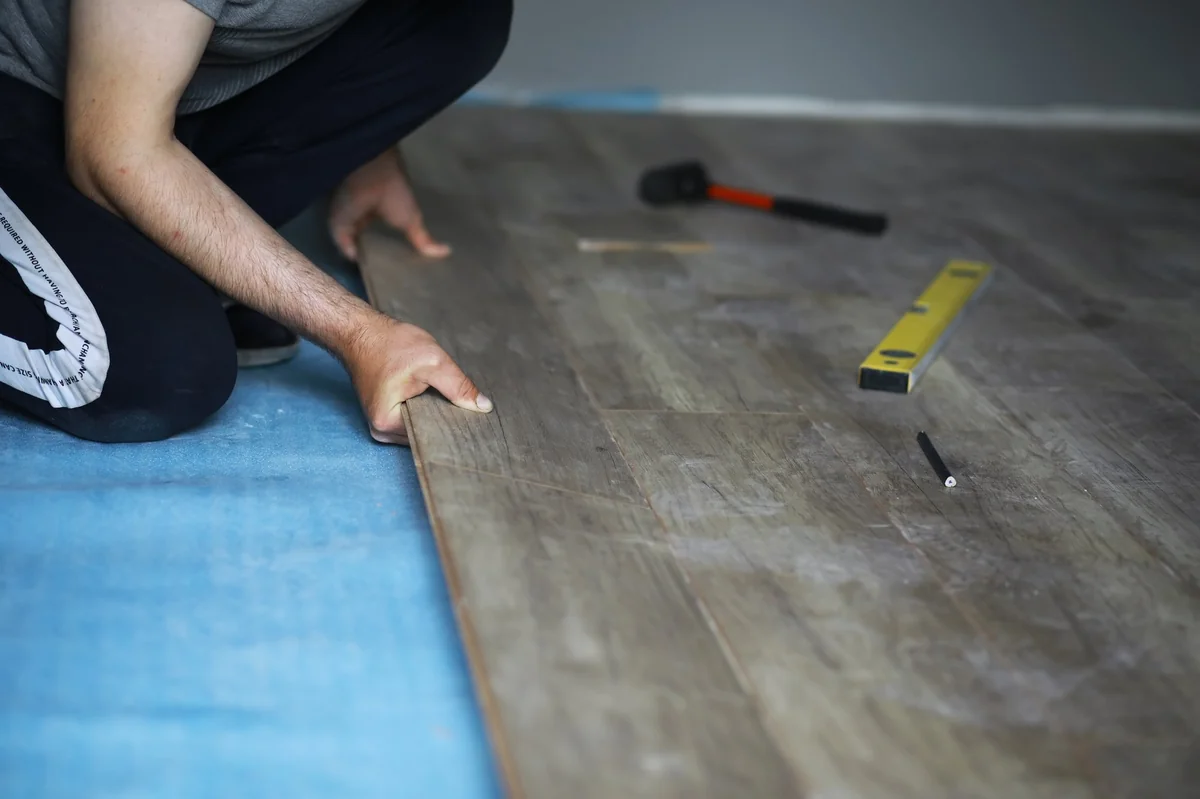
The gap isn’t always about product quality. Many capable China wooden sports floor manufacturer facilities lose contracts not because their floors underperform, but because their commercial communication does. Buyers in the B2B procurement space are managing risk across multiple stakeholders — facilities managers, project engineers, compliance officers — and they need suppliers who can speak to each concern with documented answers, not verbal reassurances.
So what does a supplier need to fix this? A few things, specifically:
- A dedicated export sales team that understands technical specifications — not just pricing — and can respond to detailed RFQs with structured, accurate answers
- Pre-prepared compliance documentation packages covering FIBA, EN 14904, or DIN 18032 certifications, depending on the buyer’s target market
- Clear lead time commitments broken down by production phase, not a single vague delivery window
- A defined sampling process — including who pays for samples, what specs are confirmed at that stage, and what tolerance levels apply to bulk production
- Payment term flexibility that reflects the commercial reality of international procurement, not just domestic factory norms
Buyers who have been through one difficult sourcing cycle tend to screen for these things early. They ask operational questions deliberately — not to be difficult, but because a supplier’s response quality at the inquiry stage is a reasonable signal of how they’ll handle a production dispute six months later.
The China wooden sports floor manufacturer that closes more contracts isn’t always the one with the lowest unit price. It’s the one that makes the procurement process feel manageable — where documentation arrives without chasing, questions get technical answers, and the commercial terms reflect a genuine understanding of how international buyers operate.
The Certification Stack That Opens Doors: What International Buyers Demand From China Wood Sports Flooring Makers
Certification requirements have become one of the most reliable filters separating serious China wooden sports floor manufacturers from factories that primarily serve domestic volume contracts. For international buyers — particularly those procuring for schools, sports facilities, or commercial venues in regulated markets — the certification stack a supplier holds isn’t a formality. It determines whether the product can legally enter the destination market at all.
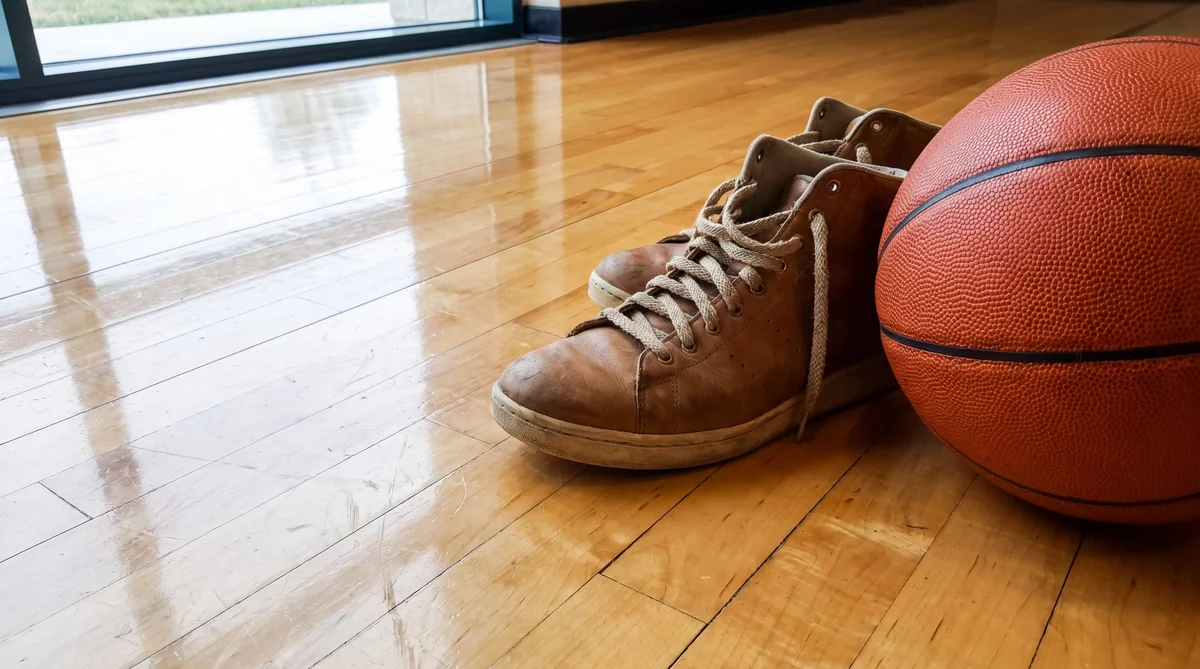
The baseline expectation differs by region, but the pattern is consistent: buyers in Europe demand EN 14904 compliance for multi-sport surfaces; North American procurement often requires adherence to DIN 18032-2 or MFMA standards; and markets in the Middle East and Southeast Asia increasingly reference FIBA homologation for basketball-specific installations. A manufacturer that holds only one of these — or holds outdated versions — creates downstream risk for any buyer trying to satisfy a tender specification or building permit requirement.
Beyond regional sport standards, the environmental and material certifications carry real commercial weight:
- CARB Phase 2 compliance (California Air Resources Board) — required for any hardwood flooring entering the US market, covering formaldehyde emissions from composite wood panels and adhesives
- FSC or PEFC chain-of-custody certification — increasingly demanded by public sector buyers and ESG-conscious procurement teams as proof of responsible timber sourcing
- CE marking — mandatory for product entry across EU member states, covering structural performance and safety thresholds
- ISO 9001 quality management certification — a baseline indicator of process consistency, not a performance guarantee, but a reasonable signal of factory-level documentation discipline
What separates capable suppliers from the rest isn’t just holding these certifications — it’s how quickly and clearly they can produce the supporting documentation. Third-party test reports, certificate validity dates, issuing body details — a China wooden sports floor manufacturer that handles these requests without friction is signaling something real about their operational maturity.
Buyers who skip this screening step early often encounter it later, at the port or the project sign-off stage. That’s a significantly more expensive place to discover a gap.
Building a Procurement-Ready Operation: Lead Times, MOQ, and Commercial Terms That Close Deals
Commercial terms are where deals either crystallize or quietly fall apart. A supplier can clear every certification hurdle and still create serious project risk if their lead times are misaligned with your installation window, or their MOQ thresholds make small-scale procurement economically indefensible.
Lead times from a China wooden sports floor manufacturer typically run between 25 and 45 days for standard production runs — though that window shifts considerably depending on species availability, finish complexity, and factory queue depth at the time of order. The mistake procurement teams make is treating a quoted lead time as a fixed commitment rather than a conditional estimate. Experienced buyers build in a buffer, confirm raw material stock status before finalizing POs, and clarify whether the quoted timeline starts from deposit receipt or from production kickoff. Those are not the same date.
MOQ structures vary more than most buyers expect. Some manufacturers set volume floors by container load — typically one 20-foot container as a baseline. Others work in square meter thresholds that can range from a few hundred to several thousand square meters depending on product line. For procurement managers handling multi-site rollouts, this distinction matters: a per-container MOQ may actually favor your buying pattern, while a square meter floor could create surplus inventory on smaller sites.
On payment terms, the standard structure across most Chinese manufacturers runs on a 30% deposit with the balance due against bill of lading documents. That said, terms are negotiable once a trading relationship has been established — net terms, letters of credit, and escrow arrangements all appear in mature supplier relationships. What signals a commercially capable manufacturer is their familiarity with these instruments, not just their willingness to accept a wire transfer.
A few commercial checkpoints worth confirming before contracts are signed:
- Whether the quoted price is FOB, CIF, or EXW — and who absorbs inland freight to the port
- Warranty terms and the mechanism for handling defect claims post-delivery
- Sample availability and whether sampling costs are credited against the first production order
- Tooling or customization fees for branded finishes, custom dimensions, or proprietary logo inlay work
The operational picture a manufacturer presents during commercial negotiation is often as revealing as their factory audit. How they handle a non-standard request — a split shipment, an accelerated timeline, a documentation change — tells you something a product spec sheet never will.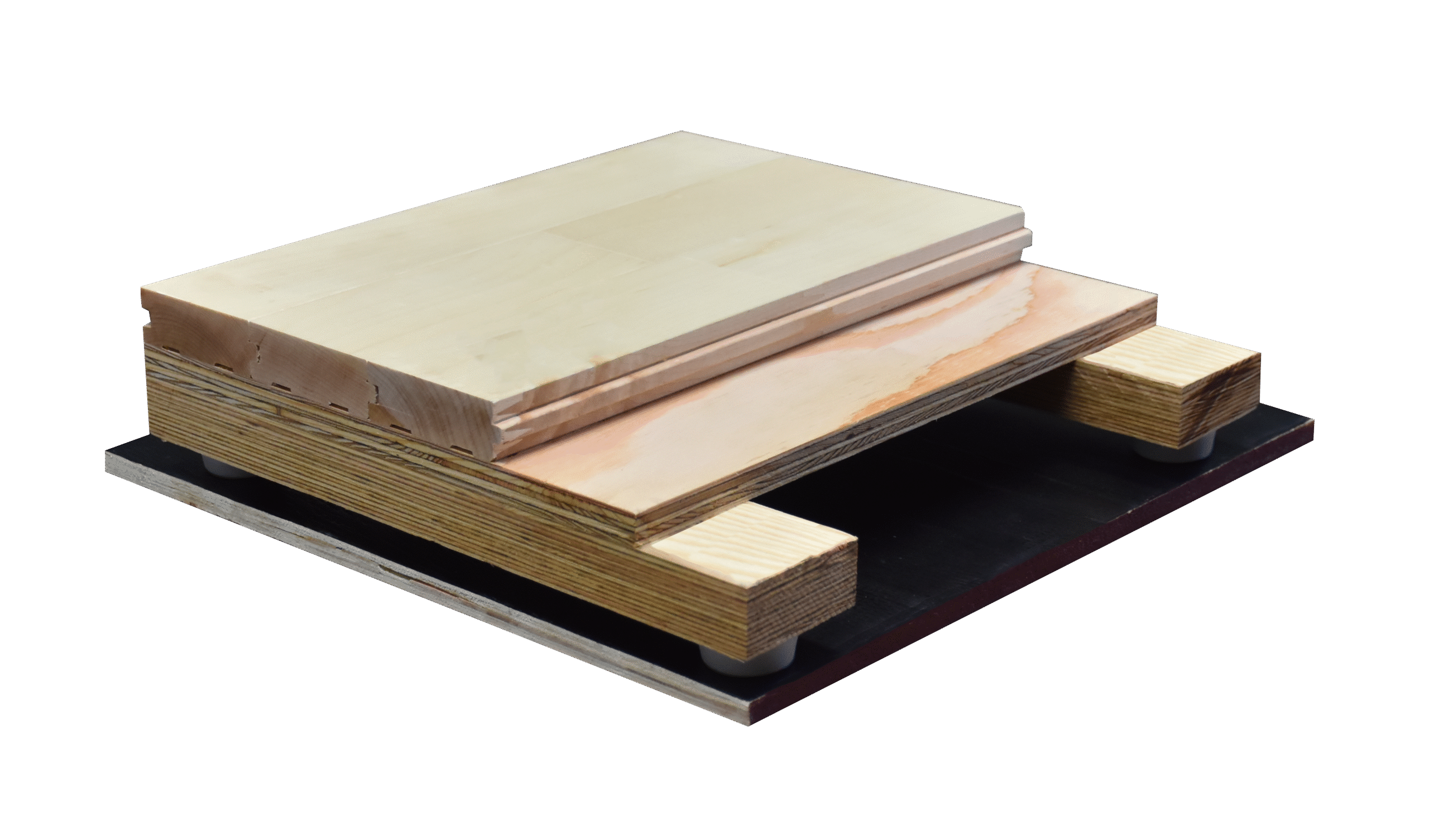
Conclusion
The right China wooden sports floor manufacturer is not the one with the glossiest catalog — it’s the one that handles a difficult question without flinching. Certifications matter. Factory audits matter. But how a supplier responds when you push on lead times, defect liability, or a non-standard finish tells you more than any brochure ever will.
Commercial fluency is the real filter here. If a manufacturer can’t speak clearly about FOB terms, warranty mechanisms, or escrow arrangements, that’s a red flag worth taking seriously before a single container ships.
Do the groundwork upfront. The sourcing decisions that go wrong almost always skipped a step that felt inconvenient at the time.
Frequently Asked Questions
Q: How do I verify that a China wooden sports floor manufacturer is actually certified to international standards?
A: Ask for the certificate number directly — then cross-reference it on the issuing body’s website yourself, rather than trusting a PDF the supplier sends over. Legitimate certifications from bodies like FIBA, EN 14904, or DIN 18032 are publicly searchable. If a manufacturer hesitates or sends a certificate that can’t be verified independently, that’s a sourcing risk worth taking seriously before you go any further.
Q: What wood species are most commonly used by Chinese sports floor manufacturers?
A: Maple is the dominant choice for competition-grade courts — it’s dense, consistent, and widely accepted by international sporting bodies. Some manufacturers also work with ash or beech, which can perform comparably at a lower material cost. What matters more than species alone is the moisture content at the time of production, which directly affects how the floor behaves after installation in your climate.
Q: How much does it cost to import a wooden sports floor from a China wooden sports floor manufacturer?
A: Total landed cost depends on floor area, finish grade, shipping route, and your local import duties — but buyers typically find that sourcing from a China wooden sports floor manufacturer comes in meaningfully below European equivalents for comparable specifications. Get quotes on an FOB basis first, then layer in freight, insurance, customs, and installation separately so you’re comparing apples to apples. Vague “all-in” pricing from a supplier you haven’t audited is usually where budget surprises hide.
Q: Why do some China wooden sports floor manufacturers offer such dramatically different price points for what looks like the same product?
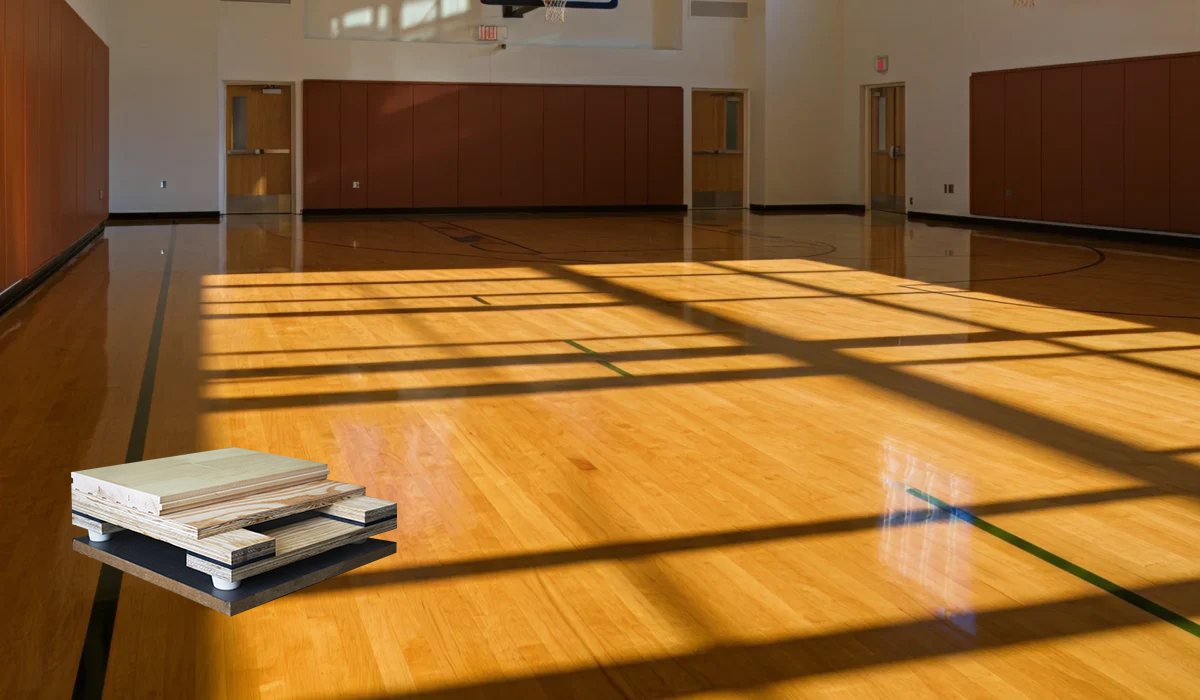
A: The gap is almost always in the subfloor system and the finish layers — two things that look identical in a brochure photo but perform very differently under load over time. A lower-priced manufacturer may be using fewer layers of lacquer, thinner battens, or lower-grade adhesive in the shock-absorption system. Requesting a full technical specification sheet (not just a product summary) is the fastest way to see where corners are being cut.
Q: Can I get a custom finish or court marking from a China wooden sports floor manufacturer?
A: Most established manufacturers handle custom court markings as a standard service — multi-sport line configurations, club colors, logo inlays. The more important question is whether those markings are applied under the finish coats or on top of them, because that affects durability significantly. Get a sample panel with your intended marking spec before approving a full production run.
Q: How long does it typically take to receive an order from a China wooden sports floor manufacturer?
A: Production lead times generally run four to eight weeks depending on order volume and factory capacity — then add three to six weeks for ocean freight to most destinations. The part buyers consistently underestimate is customs clearance and local delivery at the destination end. Build buffer into your installation schedule rather than treating the earliest possible date as the expected one.
Q: Is it worth doing a factory audit before placing a large order with a China wooden sports floor manufacturer?
A: For any order above a few thousand square meters, a third-party factory audit is one of the better investments in the sourcing process — it surfaces quality control gaps, production capacity claims that don’t hold up, and subcontracting arrangements that weren’t disclosed upfront. Many buyers skip this step because it feels like an added cost; it almost always pays for itself when it catches a problem before a container ships rather than after.
Q: What warranty terms should I expect from a reputable China wooden sports floor manufacturer?
A: Structural warranties on the floor system typically range from five to fifteen years with established manufacturers, but the language in those warranties matters as much as the number. Watch for clauses that void coverage based on humidity conditions, installation method, or maintenance products — conditions that are easy for a manufacturer to cite as the reason a claim doesn’t qualify. A warranty that requires you to prove installation compliance to an unrealistic standard is effectively no warranty at all.